40ft High Cube Reefer for Sale, ISO and CSC Plated
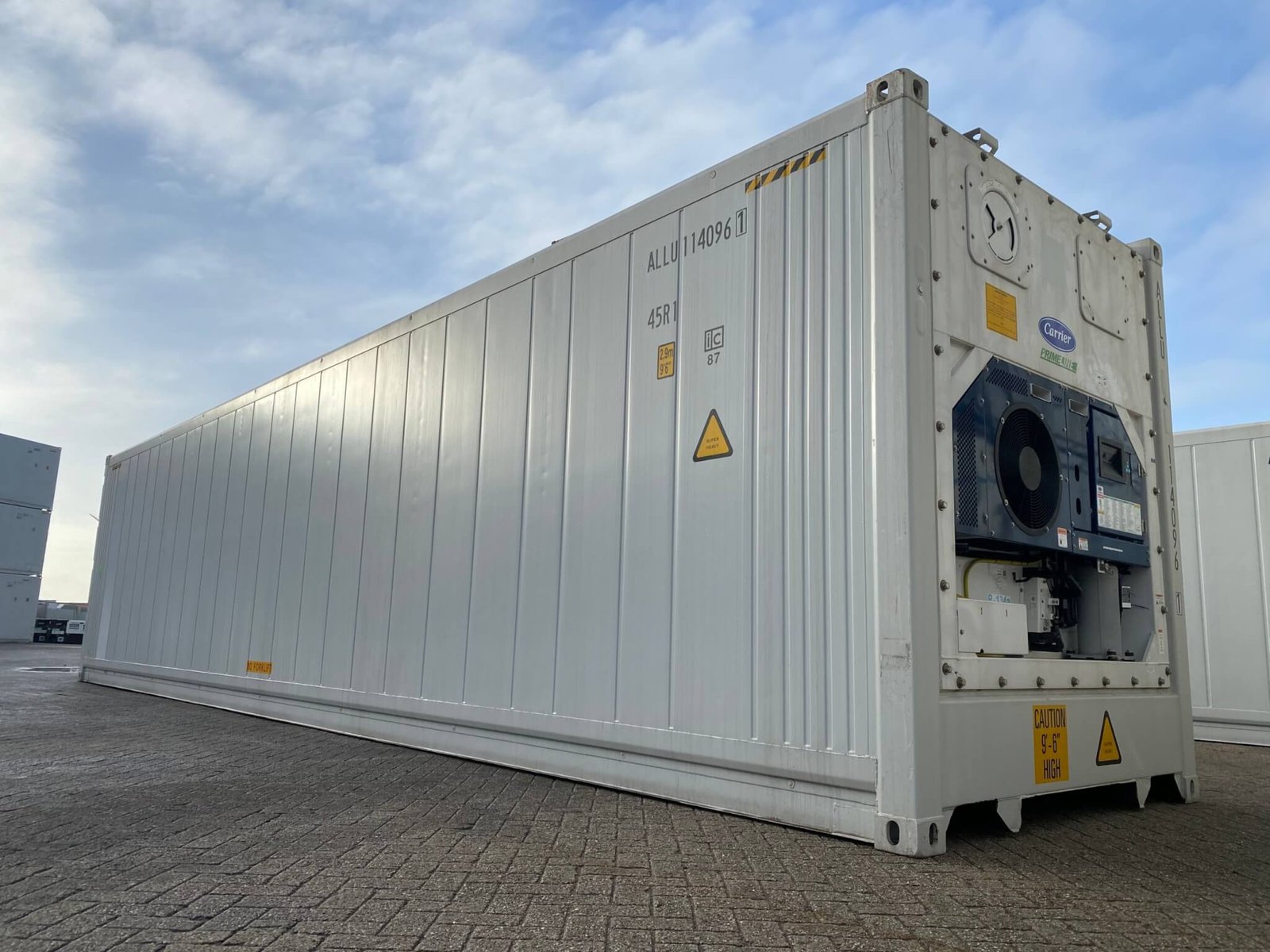
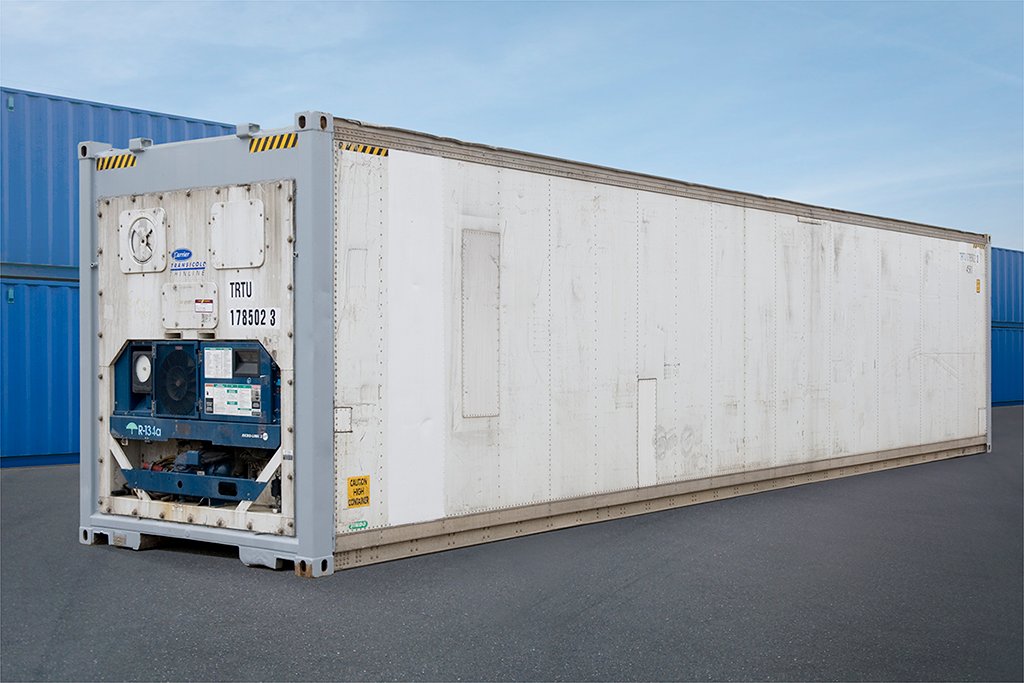
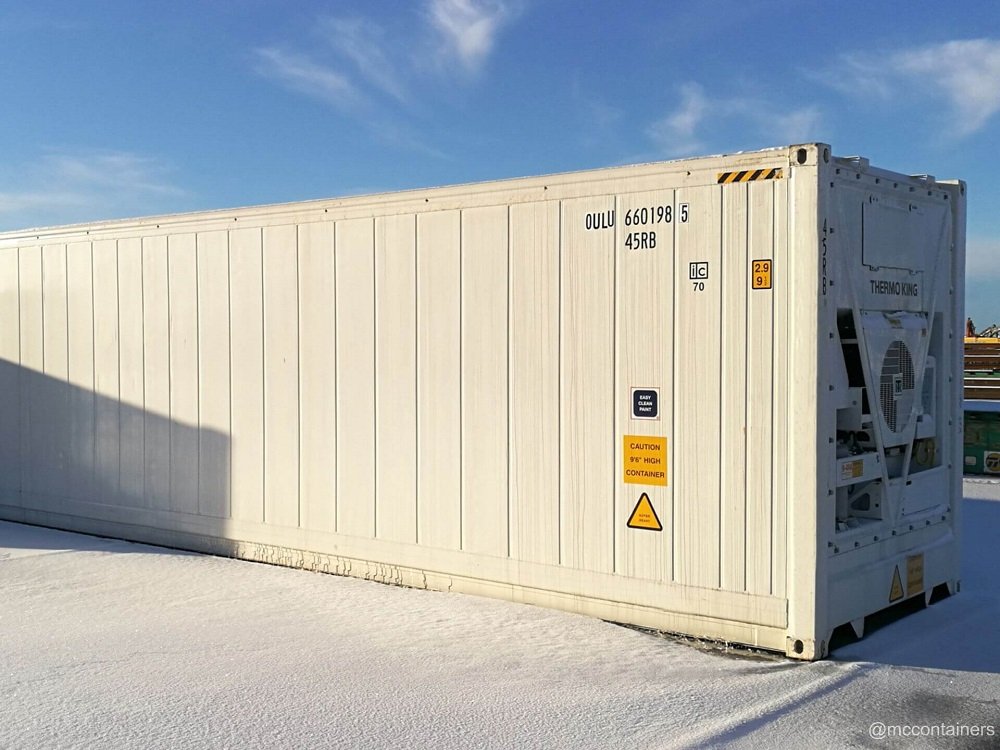
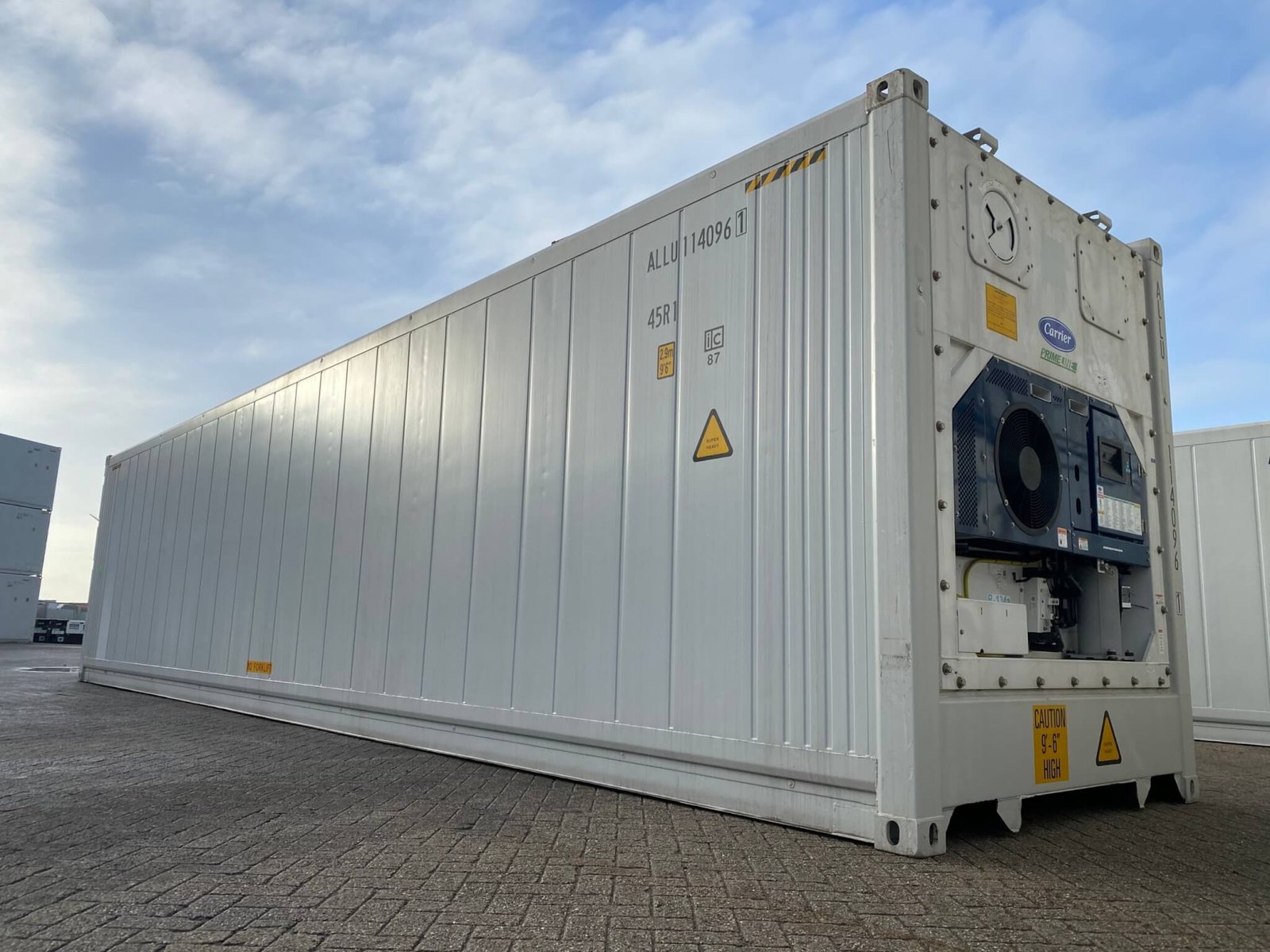
Buying a 40ft high cube reefer for sale gets you the largest single block of insulated, temperature-controlled space you can put on a truck and drop on a yard. Externally it runs to ISO dimensions of 40ft by 8ft by 9ft 6in (12,192 x 2,438 x 2,896 mm), and inside you get 38ft by 7ft 6in by 8ft 4in (11,583 x 2,294 x 2,548 mm), which works out at about 2,366 cubic feet (67 m3) of usable insulated volume. Tare weight is roughly 10,090 lb (4,575 kg), maximum payload about 64,870 lb (29,425 kg) and maximum gross 74,960 lb (34,000 kg). Stock includes both new and used units at $11,900, on the same footprint either way, so the choice comes down to condition and remaining service life rather than capacity.
Where a 40ft high cube reefer fits
- Chilled and frozen holding for meat, fish, produce and prepared foods
- Seasonal overflow at a processor or wholesaler through a peak
- Standby capacity while a fixed cold room is repaired or upgraded
- Cold storage on a farm, packhouse or distribution yard with no building space
- Temperature-controlled staging next to a loading dock
- Long-haul refrigerated transport of perishable loads
- Controlled storage for flowers, drinks and other temperature-sensitive stock
Against building a walk-in cold room, a reefer is faster and reversible. There is no shell to construct, no permit trail for a structure, and if the operation moves or the contract ends, the container goes on a truck instead of being demolished. Against a 40ft standard reefer, the high cube buys you close to a foot of extra internal height, which is the difference between stacking pallets two high with clearance and fighting the ceiling. Against two 20ft reefers, one 40ft high cube gives you more usable volume, one machine to maintain, one power feed to run and one set of doors to seal. Renting is the other route, and for a defined seasonal peak it can be the right one. Across a full year, the hire figure on a 40ft reefer tends to pass the purchase price sooner than owners expect, and at the end of it the container goes back on a truck and belongs to somebody else.
Condition, certification and running requirements
Every unit is built to ISO standards, CSC plated and pre-trip inspected before it is offered, which is the industry check on the refrigeration machinery, the insulation and the door seals. Containers are sourced only from manufacturers held to a defined quality standard, and the pre-trip inspection is what tells you the unit will hold a set point rather than merely look tidy. On a reefer, the seals and the insulation panels matter as much as the compressor, because a machine that runs perfectly against a leaking door gasket just burns power and loses temperature.
Choosing new against used usually comes down to how the container will be used. A used reefer is excellent value where the unit will sit on one site as static cold storage for years and never need shipping-line certification again. A new unit makes more sense where you need the longest service life or intend to move cargo under it. Either way, plan the electrical supply before delivery, because refrigeration units typically need a suitable high-capacity supply rather than a standard outlet, and the requirement varies with the machine fitted. We confirm the exact machinery specification, power requirement, temperature capability and condition grade of the unit allocated to your order before delivery, so tell us what you intend to store and at what set point and we will match the container to the task rather than the other way round. Airflow inside the box repays a little planning too. A reefer moves air beneath the load and back along the ceiling, so packing pallets tight to the roof or blocking the return path at the machinery end will cost you temperature stability however good the machine is.
Delivery, payment and returns
Delivery is a flat $550 anywhere in the continental United States, quoted at checkout, and typically one to three weeks from order. A 40ft unit is a serious placement job: allow 100 to 120ft of straight, firm approach for the tilt-bed truck and about 14ft of overhead clearance, and make sure the standing area is level and solid, since a loaded reefer on soft ground will sink at one corner and stop draining properly. Leave working room at the machinery end for airflow and service access. We accept Visa, Mastercard, American Express, Discover, Apple Pay and Google Pay through Stripe, and bank transfer by ACH or wire. We do not collect sales tax. Standard unmodified units carry our 30-day return with free return shipping; custom or modified units are excluded. To check what is in stock, talk through your set point and power supply.